Articles
Page 3 of 4. Back to the most recent
- Strong Renewable Energy Growth Demands Next-Generation Operational ExcellenceIntroduction—Renewables are on a strong growth trajectory In March of 2025, fossil fuel electricity generation in the US fell below 50% for the first time, propelled by rapid growth in the renewable sector. Renewable generation is on track to deliver nearly half of global electricity demand by the end of this decade according to the latest report from the International Energy Agency (IEA), this despite the vagaries of politics, subsidies, and manufacturing economics. Despite these potential headwinds, owner/operators need to invest in advanced technology like artificial intelligence (AI) to mitigate these challenges and maximize the utilization of their existing asset bases.
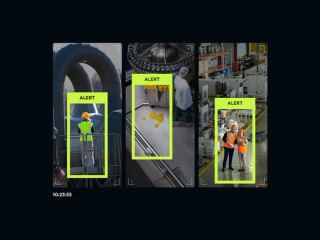
- Transforming Industrial Safety and Efficiency: Avathon Integrates NVIDIA Metropolis to Supercharge AI-Powered Video IntelligenceVideo data is everywhere—but operational insight is still rare. Industrial sectors generate thousands of hours of surveillance footage daily. From manufacturing plants and oil rigs to logistics yards and aerospace hangars, video is meant to enhance safety and efficiency. Yet, much of it goes unwatched—tucked away in servers until something goes wrong. And by then, it’s often too late. At Avathon, we’re changing that. By integrating the NVIDIA’s Video Search and Summarization (VSS) blueprint—part of the NVIDIA Metropolis platform—into our AI-powered video intelligence solution, we’re making it faster and easier for frontline teams to find what matters most.
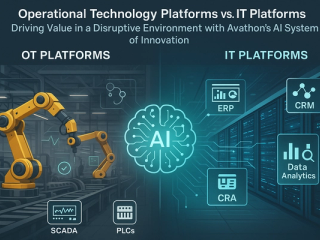
- Operational Technology Platforms vs. IT PlatformsDriving Value in a Disruptive Environment with Avathon’s AI System of Innovation By Bart A. De Muynck In today’s rapidly evolving technological landscape, businesses face unprecedented disruptions, from supply chain volatility to regulatory shifts and geopolitical tensions. As of May 2025, companies across industries are grappling with challenges like tariff-driven cost increases, increasing weather events such as drought, fire, and floods, all of which underscore the need for resilient, adaptive systems. Two critical pillars in this environment are Operational Technology (OT) Platforms and Information Technology (IT) Platforms. Understanding their differences, their roles in navigating disruptions, and how a company like Avathon leverages AI to enhance these platforms.
- AI: the windstorm for renewable energyIn the race for sustainability, wind turbines have gotten larger every year: taller towers, larger rotors, and higher-rated capacity. This increase in the size of utility-scale wind turbines makes inspections and maintenance interventions at extreme heights, often in strong winds and vibrating structures, inherently dangerous. The industry must undergo a digital transformation toward artificial intelligence to create safer, automated solutions, modeling complex relationships, predicting outcomes, and quickly creating strategic asset optimization strategies.
- Can the synthetic workforce help manufacturers navigate a wave of retirements?America is entering a workforce crisis. Industrial operators are at risk of losing the institutional knowledge of retiring workers. At the same time, they’re struggling with attracting and retaining new generations of digital natives. Approximately 48% of Gen Z employees in manufacturing intend to leave their jobs within the next three to six months. Industrial AI can help with both ends of this generational divide, ingesting decades worth of historical data, trends and learnings while also empowering new workers with the benefits of sophisticated prediction, diagnosis, prescription and automation. This upskilling is critical.
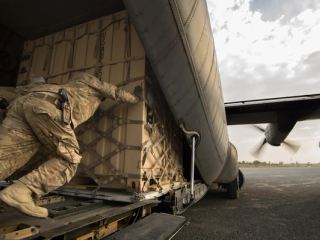
- Avoid defense dollar waste with industrial AI supply chain managementWithout resilient supply chain management, the military risks wasting the hundreds of billions it spends each year on defense assets. AI-powered supply chain solutions address the challenge of resilience head on, ensuring that our forces maximize their success on the battlefield and taxpayers get the greatest return from their defense investment. “AI-based logistics technology doesn’t just flag supply chain issues—it resolves them,” said Avathon Government President and General Manager Art Sellers. “That gives service branches full visibility and control over their supply networks, resulting in higher operational availability, faster turnaround and a more resilient force.”
- Meet the synthetic workforce: Highlights from TiECon 2025At TiECon Silicon Valley 2025, Microsoft CEO Satya Nadella reminded us that AI is not an isolated breakthrough — it’s the result of decades of innovation across personal computing, the Internet, mobile and cloud. Each wave of progress has compounded, giving rise to the explosive momentum we see in AI today. But perhaps his most lasting point wasn’t technical. “You can’t innovate without empathy,” Satya said during the grand keynote. True innovation means understanding the world through someone else’s eyes — knowing what they need and building accordingly. That message set the tone for my fireside chat later in the day with Claudia Chandra, Chief Product Officer at Honeywell Connected Enterprise.
- Here’s why you’re not getting enough value from your unstructured dataImagine your technician having a “conversation” with your equipment data to troubleshoot failures and system problems. Or automatically analyzing accident reports and camera footage to make your employees safer. These applications are available today for companies that use AI to interrogate their unstructured data—the event logs, images, customer feedback social media posts and reports that technicians and managers create each day. Without powerful technology, it’s difficult or impossible to analyze at scale, making it effectively invisible to your teams.
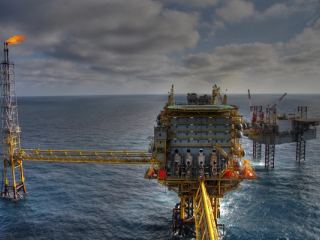
- Three AI-powered skills you need to tackle the perfect storm of aging workers and assetsUp to $500,000. That’s how much oil and gas operators could lose from just one hour of equipment downtime. These losses can add up quickly too. Based on the most recent downtime figures, industry operators face up to 27 days of downtime per year due to faulty equipment, costing potentially $38 million in lost revenue. If lost money wasn’t problematic enough, a lack of qualified maintenance personnel is exacerbating the issue. Consider this: 50% of energy industry workers are over 45 and expected to retire in the next 5 to 10 years. That’s a lot of subject matter expertise out the door. Meanwhile, equipment continues to age—with four out of ten offshore facilities over 15 years old. It’s a perfect maintenance storm.
- Four ways you could be using agentic AI to save lives, using equipment you already haveDid you know that there were 2.6 million workplace injuries in the United States in 2023? While the U.S. Bureau of Labor and Statistics points out that number fell significantly since 2022, any amount of workplace injuries can have an outsized impact on operations. Persistent, overlapping and rapidly changing factors routinely undermine the effectiveness of health and safety programs. With the number of safety hazards as vast as the number of industrial products and processes, how do you get ahead of HSE issues using equipment you already have?
- Embrace uncertainty to create supply chain resilienceIs unpredictability—the uncertainty that comes with ever-evolving supply chain disruptions—an unavoidable risk? Can technology help mitigate those issues? Ongoing supply chain disruption, including the ongoing uncertainty of global tariffs, will increase adoption of AI in the supply chain. AI and other transformative technology untangles supply chain knots by modeling uncertainty and managing risk through AI applications rooted in reinforcement and unsupervised learning, stochasticity (randomness) and knowledge graphs.
- How healthy are your industrial assets?The next wave of supply chain technology is here, but instead of focusing just on shipment visibility, AI in logistics becomes part of a cohesive infrastructure value chain. At Avathon, we’re enabling businesses and governments to move beyond static AI analysis to using an agentic platform that accelerates human-centric decision support and task automation. Seconds count when you need to avert a disaster, navigate hazardous conditions on a remote platform or return an F-16 to service. Optimizing your supply chain so that you have the right part at the right time in the hands of the right technician is a vital ingredient of that readiness.
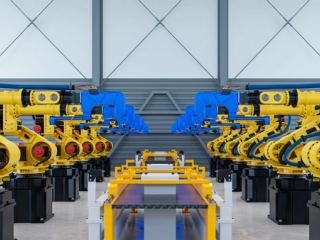
- Data is key to implementing AI in the manufacturing industryAs 2025 unfolds, several trends are converging to reshape how manufacturers use artificial intelligence to harness the value of their operational data. The sheer volume of data produced by industrial assets can be mined, analyzed and used to create high quality, more reliable products. With all these assets generating information, it’s easy to become overwhelmed. So many users simply cherry pick the information they think they need – or they don’t listen at all. Data is the lifeblood that fuels AI performance, allowing models to learn, adapt and provide accurate recommendations. Put simply, the more diverse and comprehensive the data, the better AI applications perform.
- Can the military use AI to promote government efficiency while maintaining readiness?The Pentagon spends more than $100 billion each year on direct labor and maintenance parts. That’s billion with a Capital B. And that doesn’t include associated logistics costs; those add millions of dollars to the total. The advent of better industrial AI tools begs a question: Can AI applications maintain mission readiness while reducing government spending? In an era of government efficiency, can employees use AI to increase the mission readiness of defense forces and the assets they depend upon? With the right technology, the military can boost mission readiness while also ensuring the resilience of logistics and supply chains in contested environments. With AI, how much of that $100 billion figure could be reduced?
- How is industrial AI transforming risk management?Safety issues had become a major pain point for one oil and gas supermajor. The company was racking up nonadherence safety compliance reports and numerous workforce productivity issues across its myriad locations. Enter AI-enabled computer vision. By layering Industrial AI applications on top of CCTV cameras, the company reduced its safety incidences by 90%, saving more than 11,000 workforce hours. Use of AI-powered technologies like Visual AI enables managers to be constantly aware of safety compliance, whether on an oil rig or in a manufacturing facility.
- Worker safety is a pressing issue in the oil and gas industry; AI is here to helpThe oil and gas industry already uses AI to drive process improvement, asset performance management, safety optimization, and regulatory/environmental compliance. But the pace has grown dramatically in recent years with the advent of new technologies like visual and generative AI. Some of the most important AI-driven improvements have come in the health and safety field. This is true in both refining and across the full spectrum of exploration and production activities, both offshore and onshore. It is incumbent on operators to take every available step to minimize risks to workers.
- Industrial AI and IOGP: saving lives in oil and gasWorkers’ lives and livelihoods depend on observing safety requirements at all times. Safety awareness and proactiveness are critically important in the oil and gas industry. Preventing vehicle accidents, avoiding slips and falls, and eliminating injuries caused by heavy machinery are all important elements in the safe day-to-day operation of oil rigs, refineries, and other facilities. The advanced computer vision capabilities of Avathon’s Industrial AI Platform ensures that safety practices are enforced, reducing accident rates and improving oil and gas industry productivity. With Avathon, companies can easily adhere to the life saving rules for safety in the oil and gas industry developed by the International Association of Oil & Gas Producers (IOGP).
- Artificial intelligence and the winds of changeThe windmill was invented by the Persians sometime around the ninth century, and ever since, humankind has been harnessing the power of the wind to do everything from grinding grain and pumping water to, more recently, generating electricity. Now, with the growing focus on climate change mitigation and the need to broaden the portfolio of energy-generation assets, wind power has risen to the forefront of investment and installation. Growth in the wind power industry has taken two distinct forms in recent years: more turbines being installed in more locations, and ever-larger turbines in the pursuit of greater economies of production.
- Empowering the world with digital public infrastructureLast week, world business and political leaders met in Davos, Switzerland for the 55th annual meeting of the World Economic Forum (WEF). The weeklong conference was structured around five key themes: Rebuilding Trust, Reimagining Growth, Investing in People, Safeguarding the Planet, and Industries in the Intelligent Age, all of which were subsumed under the unifying theme of Collaboration for the Intelligent Age.
- A new future built on a foundation of industrial AIEven though the origins of artificial intelligence (AI) date back to the 1940s, AI has never captured the imagination of the business, government, and the public like we have seen in recent years. It’s suddenly even common to find AI breakthroughs covered in national news broadcasts. A huge part of this groundswell of interest stems from the simple fact that there’s serious money to be made in the field of AI.
- Digital twins: models of the real world powered by industrial AISeemingly everyone is talking about how a digital twin will improve business as part of an overall Industrial AI strategy. But what does the phrase really mean, and how can a digital twin help manufacturers, shippers, and industrial companies? Simply put, a digital twin is a virtual representation of an object or system that spans its entire lifecycle; this mirror image is updated from real-time data and uses simulation, machine learning, and AI-enabled reasoning to glean insights into the operation of the real system being modeled.
- AI-powered solutions prepare international business for tariff turmoilResponding to recent announcements of impending changes to international trade regulations and tariffs, companies have, as described in a Forbes article, announced a variety of reactive approaches, including seeking alternative manufacturing sources, stockpiling inventory, and diversifying their supply chains. However, none of these tactics can happen quickly and they all come with associated costs, e.g., the tying up of operating cash that’s required to stockpile unneeded inventory.
- Visual AI transforms retail store operationsRetail and convenience store operators face many challenges, including labor shortages, traffic management, theft/pilferage, and customer/employee safety. Also, unlike online retailing, which is replete with data on everything from sales performance and returns to evolving customer preferences, physical stores often do not have access to such data. They can’t easily track and measure individual touchpoints between customers and the business, key information for improving customer experience and store profitability. Artificial intelligence (AI) is uniquely poised to change this scenario and has begun doing so for several companies Avathon has worked with in recent years.
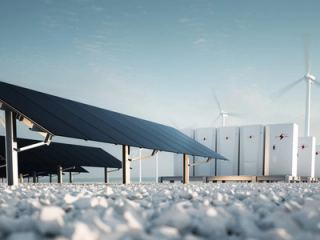
- AI optimizes battery energy storage system performanceWith renewable energy asset deployment rapidly growing to meet ambitious carbon-reduction goals, the success of wind and energy generation depends increasingly on the ability to store energy to meet inconsistent demand swings. That goal is achieved using battery energy storage systems (BESS), which are fast becoming a crucial component of renewable project success. As battery storage has grown in recent years—expected to total 30 GW by the end of 2024 in the U.S.—there is an equally growing need for solutions to monitor and maintain these complex assets. To deliver on their many benefits, BESS systems—like all technology assets—require continuous performance tracking and occasional maintenance.