Skip to contentArticles
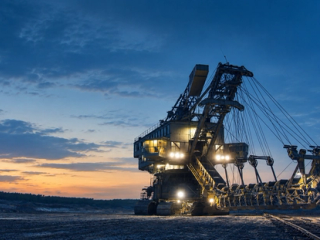 ARTICLEPredicting the Unpredictable: How AI Tames Ore VariabilityOre grades fluctuate, mineral composition shifts, and every swing hits yield and cost per ton. Here is how real-time AI turns that variability into higher recoveries, safer sites, and a synchronized mine-to-market supply chain.
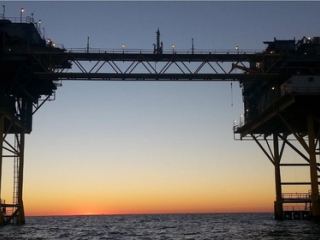 ARTICLEBeyond the Drill Bit: The AI Revolution in Upstream and Downstream OperationsOil and gas operators are drowning in sensor data while unplanned downtime still costs an offshore rig up to $500k an hour. Here is how AI turns that deluge into asset integrity, autonomous operations, and supply chain margin.
 ARTICLEHow to Redesign Work for AIAvathon CEO Pervinder Johar joins other industry leaders in a recent Adam Mendler article on redesigning work for AI, arguing that an AI-ready workforce depends as much on deep operational knowledge as it does on the technology itself.
 ARTICLEAI "Buy vs. Build": Practical AI Adoption, Strategic Positioning, and the N.O.W. BlueprintThe global supply chain landscape is navigating structural shifts marked by persistent trade friction, price volatility, and unyielding market shifts. This article outlines how to navigate the AI era, balance buy versus build decisions, achieve "AI speed," and turn supply chain complexity into a decisive competitive advantage using the N.O.W. Philosophy and N.E.W. Technology Methodology.
 ARTICLESilicon Intelligence: AI’s Role in High Technology Industrial Excellence By employing Avathon’s autonomous AI-enabled tools like computational knowledge graphs and normal behavior models to streamline complex supply chains, mitigate disruption, and foster optimal human-AI collaboration, tech leaders can maintain stability and profitability in a historically volatile market.
 ARTICLEBreaking the Silos: AI Unifies Logistics and Operating Visibility The scale and complexity of accelerating global growth rates in international logistics, combined with evolving political priorities, means that the complementary relationship between AI and operational performance of logistics operators grows in importance with each day and each new delivery. As the world’s trading volume continues to grow, the unique capabilities of Avathon’s Autonomy Platform will be key to ensuring that your future logistics needs are met sustainably and profitably.
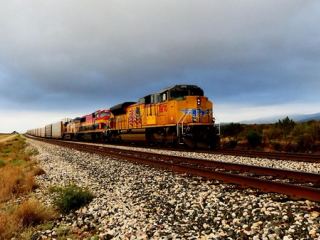 ARTICLEOn the Right Track: AI is Powering Performance in the Rail Industry The integration of AI into ongoing operations marks a pivotal shift for the rail industry, transitioning it from a reactive infrastructure to a proactive, data-driven ecosystem. By harnessing predictive maintenance to virtually eliminate unforeseen downtime, optimizing traffic flow to expand network capacity without laying new track, and utilizing computer vision to heighten safety standards, AI serves as the cornerstone of a modernized rail network.
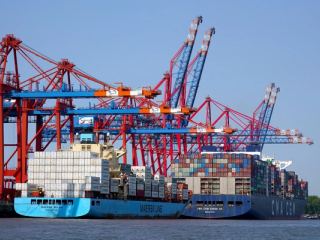 ARTICLENavigating the Future: How AI is Reshaping Ocean CarriersOcean shipping is a capital-intensive industry that has historically relied on the experience of seasoned experts to navigate unpredictable seas. But today, artificial intelligence (AI) is turning that limitation and uncertainty into operational resilience. AI allows carriers to optimize voyage routes dynamically, cut fuel consumption, and predict maintenance needs before costly breakdowns occur. In an industry where a single day of delay can cascade into millions in losses, machine intelligence has become the ultimate captain—transforming ocean carrier logistics from a game of reactive damage control into a science of predictive agility.
 ARTICLEScaling AI Is Enterprise’s Biggest Challenge: The Importance of PartnershipTransitioning an artificial intelligence (AI) solution from a successful proof-of-concept to full-scale enterprise production is a significant challenge. Moving from a sterile prototype to a living system that handles millions of unpredictable, messy user interactions in real time requires a profound transformation of data sources/pipelines, organizational culture, and infrastructure that most companies aren’t prepared for. Bottom line: The journey to AI-powered autonomous operations is a complicated one; you need a trusted guide who has seen all the foregoing issues and knows how to address them effectively and efficiently.
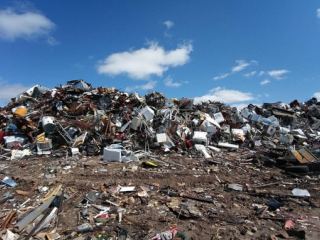 ARTICLEThe Predictive Pivot: Stopping Operational Waste Before It StartsMinimizing waste across your business isn’t about working harder—it’s about operating smarter. Whether that means aligning supply chains to eliminate unneeded inventory, using computer vision to catch defects at the source, controlling HVAC systems to match real-time building occupancy, or solving the logistical puzzle of empty miles, AI replaces guesswork with precision. By converting massive streams of operating data into instant, actionable decisions, Avathon’s Autonomy Platform enables companies to transition from a reactive model of clean-up to a predictive model of prevention.
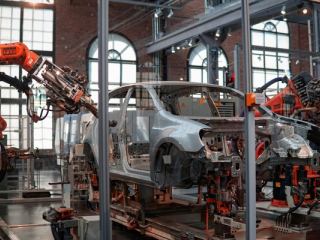 ARTICLEPredict, Prevent, Protect: AI Manufactures Safety on the Factory FloorContinuing year-on-year increases in factory risks and worker accident rates do not have to be accepted as a normal state of affairs. The development of computer vision and visual AI have in recent years achieved a level of technological maturity and adoption that such systems can now deliver genuine value to enterprises and greater workplace safety for employees. Avathon’s Autonomy platform minimizes time-to-value for operationalizing enterprise computer vision technology, delivering sustainable HSE benefits across a wide range of manufacturing processes and locations.
 ARTICLEThe Future Success of AI Depends on a Clear Roadmap: Strategic Blueprint for Supply Chain Excellence Starts with Process and PeopleCompanies can no longer afford to view artificial intelligence as a standalone technology project. Instead they must treat it as an evolutionary milestone for their processes and people. Much like the foundational Six Sigma methodologies of past decades, which fundamentally proved that automating a broken, inefficient process only accelerates chaos, successful AI implementation demands that business processes and their supporting software be reengineered and stripped of friction before any software is deployed.
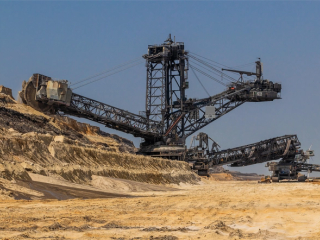 ARTICLEAI in the Mining Industry: Extracting Productivity and ProfitsPrecious mineral mining and processing are inherently variable—ore grades fluctuate, mineral composition shifts, and recovery conditions change daily. This variability directly affects yields and operating costs. By applying real-time intelligence to ore quality data, operators can dynamically update process parameters to maximize recovery while minimizing reagent use and other input costs. Avathon’s Autonomy Platform delivers AI-driven, end-to-end planning, decision intelligence, and autonomous actions across the mining value chain—from exploration and logistics to asset management, supply chain optimization, and HSE adherence.
 ARTICLEFrom Task-Doers to Strategic Thinkers: How AI Transforms TeamsArtificial Intelligence (AI), implemented correctly, acts as a lever for human potential rather than simply a cost-cutting tool. The promise of the AI revolution is undeniably enticing: a world where teams are liberated from the monotony of data entry and calendar shuffling to focus instead on high-level strategy and creative breakthroughs. Yet, this rapid shift from “task-doer” to “strategic thinker” can be a double-edged sword. While AI acts as a powerful enabler of operational efficiency and upskilling, it simultaneously introduces potentially complex friction points—ranging from expectations of heightened productivity and cognitive atrophy to workplace isolation and perpetual change fatigue.
 ARTICLEThe AI Ledger: From Cost Center to Growth EngineBuilding a compelling business case for an artificial intelligence (AI) project requires balancing technical potential with hard financial reality. Ultimately, building a business case for an AI project is not simply a bureaucratic hurdle—it’s your strategic roadmap for ensuring value creation from the endeavor. By rigorously defining your operating problem, calculating the true total cost of ownership, and establishing clear guardrails against common pitfalls like data drift and scalability, you transform a risky tech experiment into a predictable, value-creating investment. AI has the power to fundamentally reshape a company’s operations, but only if it is structured on a bulletproof business rationale.
 ARTICLEData-Driven Durability: The ROI of Predictive MaintenanceAsset-intensive industries rely on uninterrupted performance to ensure the financial health of their operations. Failures— particularly unplanned ones—reduce outputs, compromise quality, put employees at risk, and lead to higher costs. Predictive/prescriptive maintenance helps managers keep their assets operating efficiently and economically, maximizing lifetimes and extracting the greatest value from their fleets. By identifying the subtle “fingerprints” of system failure long before they are apparent to the human eye, predictive/prescriptive maintenance ensures maximum performance and lifetimes from expensive capital equipment.
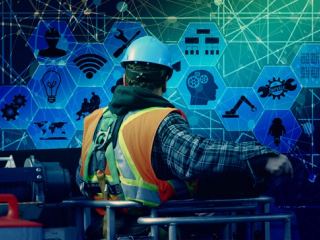 ARTICLEDigital Twins: Connecting Virtual Models to Real ResultsIn industrial operations, a digital twin is a virtual representation of a physical asset, process, or system that spans its entire lifecycle. This mirror image is updated with real-time data and uses simulation, machine learning, and AI-enabled reasoning to glean insights into the operation of the real system being modeled. While the twin provides the “body” (the data structure and visualization), artificial intelligence (AI) acts as the “brain.” This identical but virtual reproduction of an entire physical system or device runs in parallel with the analogous system or device. The synergy between the two allows industries to evolve from simply seeing what is happening in their operations to predicting and optimizing what will happen next.
 ARTICLEBeyond the Hard Hat: Why the Next Era of Oil & Gas Safety is AI-DrivenOil and gas (O&G) workers’ lives and livelihoods depend on observing safety requirements at all times. Safety awareness and proactiveness are critically important in every area of the industry: upstream, midstream, and downstream. The key to ensuring workplace safety is proactive awareness of the conditions that can lead to accidents. Avathon’s Autonomy Platform enables managers to automatically monitor equipment and personnel status, assess risks, and deliver real-time notifications to team members that reduce or eliminate incidents. The platform can also autonomously shut down equipment, immediately mitigating risks without relying on employee actions.
 ARTICLEWhy Supply Chains are Shifting from Rigid Systems to Adaptive NetworksSupply chains have always been dynamic, physical ecosystems. The tragedy is that we have tried to run them on software that is rigid and deterministic, systems built on the assumption that operations can be configured and re-configured as needed. That assumption is now broken, and so is the software built on it. Legacy enterprise software is, in a real sense, departing. The era of deterministic, hand-coded, configuration-heavy apps has ended. AI-native systems are beginning to supplement rigid rules with tools that can interpret context, support planning and adapt to changing conditions. Supply chains that learn, adapt and act continuously will turn volatility from a constraint into a source of compounding advantage.
 ARTICLESupercharging Sustainability: The Intelligence Behind Renewable AssetsAsset-intensive industries like electric power generation (renewable and traditional) rely on uninterrupted performance to ensure the financial health of their operations and organizations. Failures reduce energy outputs, compromise service reliability, and drive down financial performance. Predictive/prescriptive maintenance helps industry managers and executives keep assets operating efficiently and economically, maximizing asset lifetimes, and extracting the greatest value from their fleets. As the world’s energy needs continue to grow, leveraging the power of AI will be key to ensuring that the planet’s future energy needs are met in a sustainable and economic way.
 ARTICLEThe Smart Pivot: How AI Makes Supply Chains ResilientThe relentless pace of global commerce, buffeted by unprecedented disruptions like changing tariffs, geopolitical shifts, and volatile demand, has solidified supply chain agility as the ultimate competitive differentiator. But unexpected operating shocks like the outbreak of war in a supplier nation, a pandemic that keeps trained workers at home, or a halt in shipping operations can lead to severely compromised supply chain performance. Factor in the increasing variety and quality of goods being demanded by consumers and manufacturers/shippers can struggle to function effectively in the face of these day-to-day challenges.
 ARTICLEManufacturing Quality at Scale: The AI MandateManufacturers face enormous operating and cost pressures, challenged to scale production while simultaneously innovating new products and meeting uncompromising quality standards. To compound matters, manufacturing supply chain managers must deal with diminishing material sources and input shortages, long lead times, and geopolitical or trade-driven sourcing and selling disruptions. By embracing these trends and harnessing the power of AI, manufacturers can stay ahead of the curve and position themselves for success in an increasingly competitive global market—enjoying higher production rates, with fewer supply chain disruptions, lower overall costs, and reduced defect rates.
 ARTICLEFrom Reactive to Proactive: How AI is Redefining the Future of MROIn the high-stakes world of aviation, Maintenance, Repair, and Overhaul (MRO activities have, in recent years, shifted from a reactive model to a proactive, data-driven strategy designed to ensure the maximization of service levels and resource utilization while minimizing operating risk, to both workers and assets. Artificial intelligence (AI) is the engine behind this evolution, focusing on minimizing Aircraft on Ground (AOG) time and maximizing worker and passenger safety. The future of MRO isn’t just about turning wrenches; it’s about maximizing the value of all available data. In an industry where every second of downtime is a line item on the balance sheet, the choice is simple: evolve your intelligence or get left on the tarmac.
 ARTICLEBeyond the Breakdown: AI Keeps Watch Over Industrial AssetsAI-enabled asset performance management (APM) is predicated on two important capabilities: prediction and prescription. The former provides proactive insights into when failures are about to take place and when, while the latter tells operators what they can do to either prevent the failure or best manage their response to minimize process disruptions along the way. Both of these important capabilities are, however, built upon a critical foundation, i.e., the fact that assets do not operate throughout their lifetimes the same as they did the day they left the factory. Assets age, parts wear out, maintenance takes place, hostile operating environments take their toll.
