Introduction
Fresh off Reuters EnergyLIVE 2025 in Houston, we’re still digesting everything we heard and learned about the current state of the energy industry and the issues on the minds of industry leaders. Key challenges and opportunities of course vary depending which industry you happen to work for (oil and gas, electric power, renewables), but there are definitely some consistent themes that emerged from our discussions with line-level managers and executives from these verticals. It will not come as a surprise to hear that top issues center around operating and capital costs, particularly given the parlous state of the economy throughout much of this year and prospects for the coming year. But it’s definitely not all about cost management, as we’ll see in a bit.
So, let’s dive into a few of the top issues and challenges that were on peoples’ minds.
Data centers: The next big thing
Scroll through the presentation topics agenda for the conference and fully half of that list contains the phrase “data centers.” Without question, it was the number one issue being discussed this year: the unprecedented growth rate and, in particular, the power that will be required to operate these centers and the countless servers they contain.
Construction growth through the end of October totals $43.8B (projected to exceed $52B by year’s end). This is more than double the $20B total for last year at this time. The demand for these facilities is being driven by the widespread adoption of AI and cloud computing, and all current forecasts point to even sharper growth in the coming few years.
That growth raises a fundamental question for energy leaders: where will all the power come from? U.S. data center consumption totaled 176 TWh in 2023 (about 4.4% of total U.S. power generation) and is expected to climb to 500–600 TWh by 2028, representing 12–13% of total generation.
Compounding the challenge of generating all this power is the interesting, if subtle, trade-off inherent in this issue, i.e., where should I locate my new center? Given that data centers typically do not require large staffs to operate (indeed, some operate totally “dark”), a reasonable person might suggest constructing them close to renewable generation sites, i.e., wind/solar farms. The problem is that these sites are invariably far from population centers, and while this doesn’t cause a large staffing issue, it does cause what’s known as data latency problems, i.e., the time it takes for queries/results to get from the user to the center and back again. While remote location could reasonably be expected to add only a few milliseconds of transit time for each transaction, these fractions of seconds matter a great deal for many of the sorts of transactions for which data centers are relied upon. So, we’re right back to our original question: where do I locate my center to ensure the performance users demand and access to the power I need to run it?
Safety in the energy workplace
Second-place honors for most popular topic of conversation at the event went to safety and security.
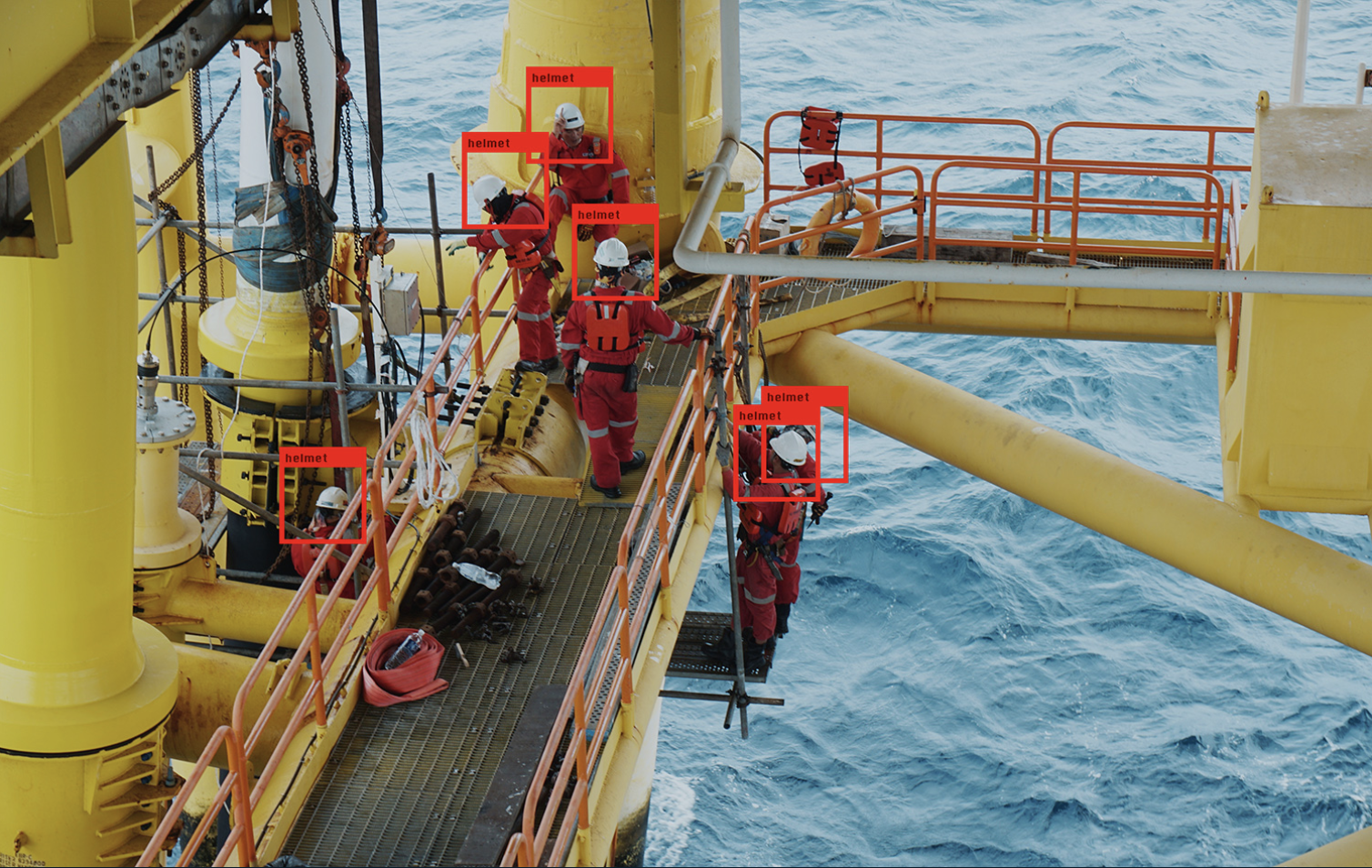
Energy production and distribution, whether oil and gas or power production/distribution, is without question one of the most hazardous industries to work in. This is, of course, especially true on oil rigs and for climbing jobs like wind turbine work. As a consequence, event attendees presented numerous questions about the ways in which AI can help address these challenges. Whether it’s ensuring PPE compliance (hard hats, safety goggles, gloves, harnesses, etc.) or detecting worker/vehicle interactions, suspended loads, or proximity to rotating machinery, there were question aplenty about the ways in which cameras (with which these facilities are typically well equipped) can be utilized with AI applications to better manage safety practices and outcomes.
The current and emerging role of AI
Plenty of energy companies have dipped their toes into the AI waters, if only to begin exploring where the most valuable opportunities lie. But the resources and expertise required to extract the greatest value from the technology means that to this point it’s mainly those companies with the deepest pockets (O&G supermajors and large integrated utilities) who have managed to successfully implement wide-ranging applications affecting major areas of their operations.
These typically include not only use cases like the safety issues discussed in the preceding section, but also predictive/prescriptive maintenance applied to capital-intensive assets like extraction, generation, and refining equipment.
Predictive maintenance uses the analytical power of AI to ingest thousands of performance measurements in real time (e.g., pressure, temperature, flow rate, power consumption) and predict when assets are going to fail based on divergent measurement values. Even more importantly than predicting an equipment failure, prescriptive models provide next-action recommendations that enable an operator to either forego a failure entirely or better manage one that’s inevitable by, say, reducing equipment output until a future work time when demand is lower and repair experts and spare parts can be gotten to the site.
The evolving energy mix: The impact of renewables
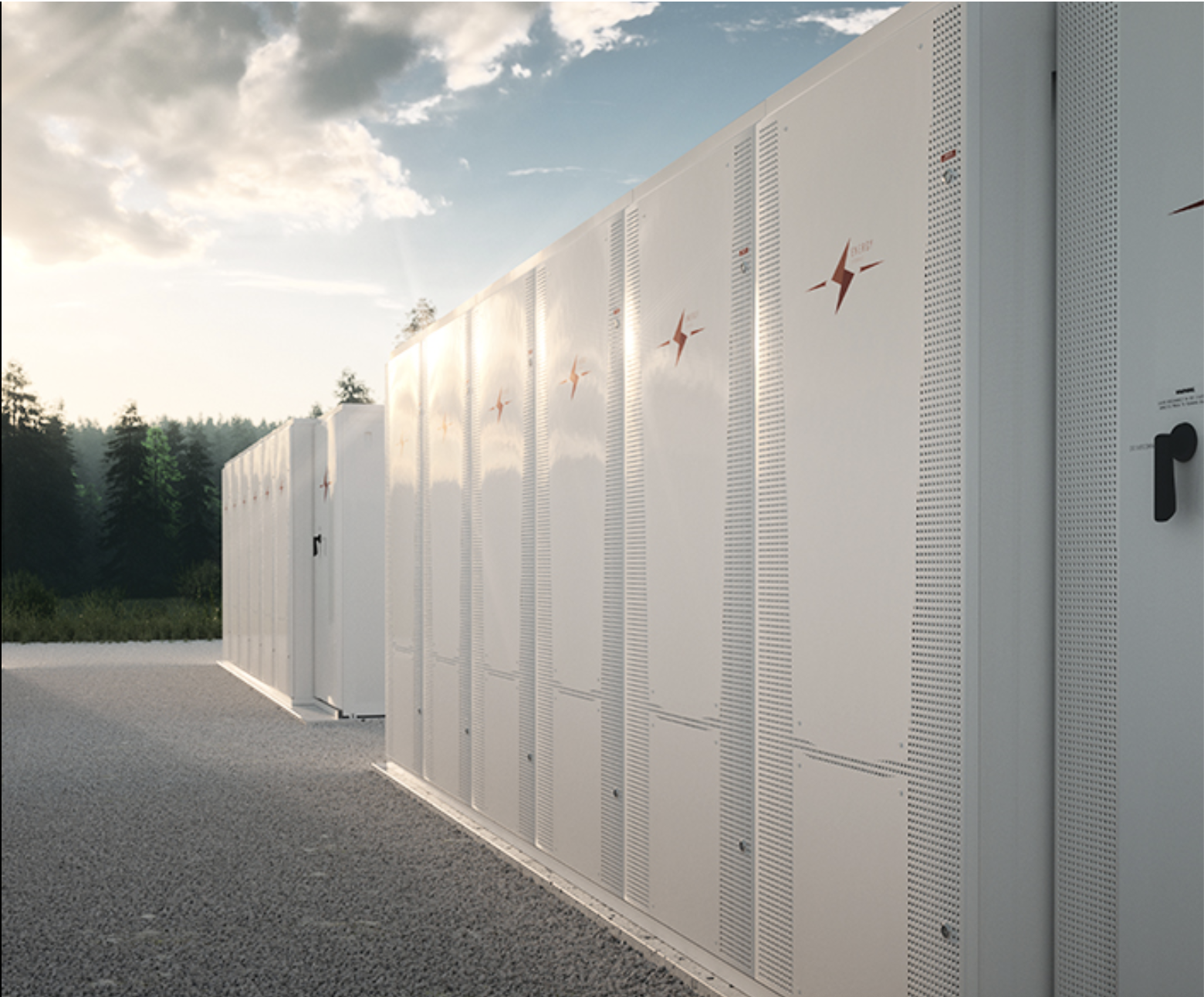
Driven partially by the data center construction surge, but also by the overall increase in power consumption, particularly in the less developed but fastest-growing areas of the world, energy managers are faced with questions of how to best balance their portfolios between traditional (coal, gas, oil) power generation and renewables. This conundrum is made more challenging by the inconsistency of renewable generation (i.e., when the wind blows and the sun shines), a challenge that has only been partially addressed by the emergence of battery energy storage systems (BESS) in recent years.
The ability of AI models to maximize renewable generation performance (through applications like blade angle optimization, turbine bearing failure prediction, solar panel cleanliness monitoring, and inverter performance tracking) was, thus, on the minds and in the questions of many event attendees.
Data: What do we need? Where will it come from?
Discussions of the role of AI in energy management didn’t usually get too far before someone brought up the subject of data. This can include the quality of the data, compatibility from one asset to the next, handling missing or corrupt data, and simply getting it all from where it’s generated to where it’s needed to drive the models.
Asset-heavy sites like refineries and power plants do not lack performance data from their equipment. But getting all those many thousands of sources into a common format that is compatible with an AI model can be a non-trivial exercise, to put it kindly, particularly when dealing with legacy systems that are decades old.
Conclusion: The more things change, the more they stay the same
So, what’s our key takeaway from two days in Houston conversing with energy industry strategists and practitioners? One thing is certain: AI is here to stay and it’s adding genuine value for those organizations who have the resources, skills, and inclination to dive in. No one in attendance doubted the opportunities that the technology presents, even if a few did express concern about making an investment value case based on short-term profitability.
From mankind’s first campfire to the latest developments in sustainable power generation, energy creation and consumption have defined and propelled human advancement. That simple fact is not going to change anytime soon. And, whether it means enhancing worker safety, analyzing seismic data faster, predicting equipment failures before they happen, or optimizing wind turbine performance, AI is uniquely positioned to play a profound role in the future evolution of the world’s energy production, distribution, and use.
To learn more about Avathon’s AI-powered solutions for the global energy industry, visit our site.