
Manufacturing's Autonomy Revolution: From Machines to Intelligence
Industrial AI is dismantling the century-old model where humans decide and machines execute. The real revolution isn't installing AI on the factory floor, it's giving the factory the ability to think, learn, and act for itself.
Introduction: Technology is new; the challenges of manufacturing aren't
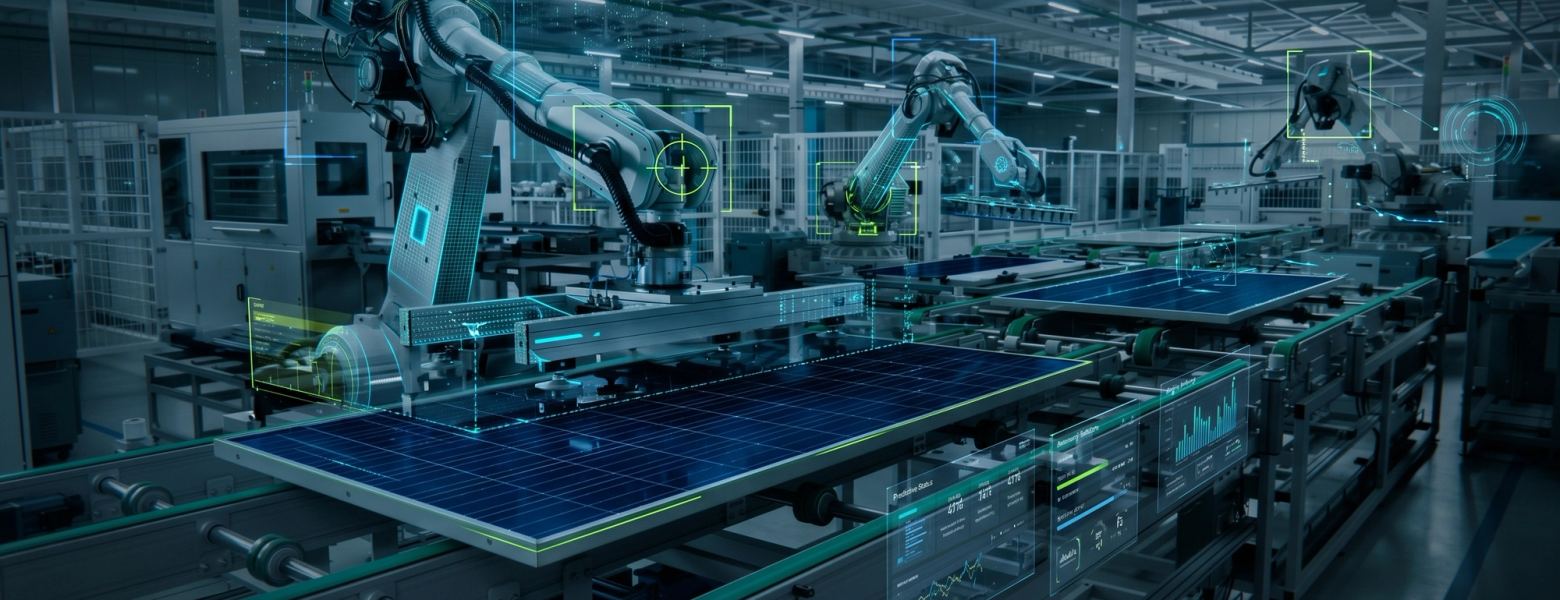
For more than a century, manufacturing has operated around the organizational principle that (a) humans decide what should happen, (b) machines execute those decisions, and (c) engineers step in when something goes wrong. Artificial intelligence (AI) has, in recent years, begun dismantling this model. Today's industrial AI can ingest and evaluate billions of signals from machines and processes, recognize patterns no human operator could possibly see, predict equipment failures before they occur, and increasingly act on its own to change, and ultimately optimize, how equipment operates. The real manufacturing revolution, then, isn't just about installing AI on the factory floor; it's about giving the factory the ability to think, learn, and act for itself.
Manufacturers face enormous operating and cost pressures, challenged each day to scale production while continuing to innovate new products, meet uncompromising quality standards, and keep workers safe. In addition, manufacturing supply chain leaders must respond to diminishing material sources and input shortages, long lead times, and geopolitical or trade-driven sourcing and selling disruptions. By harnessing the power of AI, manufacturers can better position themselves for success in an increasingly competitive global market, enjoying higher production rates, fewer supply chain disruptions, lower overall costs, and optimized product quality.
AI tackles the critical operating challenges of profitable, high-quality manufacturing
Product Quality Control and Defect Detection
Rather than wait to catch defects at the end of a manufacturing assembly line, when significant cost has already been committed (whether complex assemblies like automobiles and aircraft or simple products like potato chips and bottled soda), AI can use camera imagery and sensor data to identify product defects and monitor variables like temperature and pressure in real-time, adjusting machine operating parameters to prevent sub-par products from reaching the end of the production line.
- Visual Inspection: Identifies microscopic scratches, cracks, paint inconsistencies, or weave flaws on materials like glass, textiles, or metal.
- Assembly Verification: Ensures all components, screws, wires, and labels are correctly placed and oriented.
- Dimensional Accuracy: Scans product geometry to confirm dimensions match specifications.
- Acoustic and Vibration Sensors: Analyzes high-frequency audio or motor vibration patterns to flag internal gear misalignments, bearing wear, or improper torque applied during assembly.
- Thermal and Infrared Imaging: Detects hotspots or uneven heat dissipation in electronic circuit boards or plastic molding processes.
- X-Ray and Ultrasonic Imaging: Checks internal welds, void spaces inside castings, or structural bond integrity without destroying the part.
- Closed-Loop Process Control: Adjusts line parameters (such as conveyor speed, injection pressure, or cooling temperature) in real time to keep production within target quality bands.
Asset Integrity, Reliability, and Predictive/Prescriptive Maintenance
Asset performance management (APM) has moved beyond fixed schedules to advanced maintenance approaches that anticipate issues and proactively address them. Using AI and sensor data to predict failures before they happen and recommend mitigating actions, equipment uptime and life span are extended, and the firefighting mentality of reactive repairs can be eliminated.
- Failure Prediction: IoT sensor integration paired with machine learning models predicts component failures/times, schedules maintenance dynamically, and optimizes spare parts inventories.
- Vibration and Acoustic Analysis: Tracks high-frequency vibration signals and sound profiles to detect micro-cavitation in pumps, gear pitch degradation, or bearing unbalances long before physical damage occurs.
- Thermal and Electrical Monitoring: Tracks current draw, voltage spikes, and thermal decay patterns to identify insulation breakdown, motor winding resistance, or electrical overload.
- Operational Baselines: Establishes dynamic baseline signatures for normal machine operations under varying load conditions, distinguishing normal operational spikes from true structural anomalies.
- Degradation Modeling: Compares current telemetry trends against historical failure patterns to predict precisely when a component will exceed safety or operational tolerances.
- Automated Work Order Generation: Automatically logs tickets in the plant's Asset Management system, reserves required spare parts, and schedules repairs during planned production gaps.
Supply Chain Agility, Logistics, and Fulfillment
AI-enabled digital twins provide real-time visibility across tiers of suppliers, navigating global disruptions, optimizing warehouse operations, identifying bottlenecks weeks in advance, and suggesting alternative routing or identifying local sourcing options, ensuring smooth material flow from suppliers to the loading dock.
- Dynamic Safety Stock Calibration: Continuously adjusts buffer inventory levels across distribution centers, preventing both costly overstocking (working capital waste) and stockouts.
- Supplier Performance and Risk Scoring: Scans news feeds, financial filings, trade data, and weather alerts to flag potential supplier bankruptcies, port congestion, or regional labor disruptions before they can affect production.
- Autonomous Sourcing and Contract Analysis: Reviews thousands of supplier contracts, purchase orders, and compliance certificates, verifying tariff classifications, delivery SLAs, and ESG compliance.
- Automated Reordering: Automatically triggers purchase orders when inventory approaches dynamic reorder thresholds, taking into account lead times, supplier reliability, and volume discount tiers.
- Real-Time Dynamic Rerouting: Monitors traffic, weather, customs delays, and port dwell times, calculating optimal transportation routes for trucks, ships, and trains to reduce transit times and fuel consumption.
- Load and Container Optimization: Optimizes packing of pallets, containers, and delivery trucks to maximize space utilization and maintain weight balance.
- Freight Rate Prediction: Analyzes spot market rates across shipping modes (air, sea, rail, road) to help logistics managers lock in favorable carrier rates.
End-to-End Supply/Demand Planning and Forecasting
AI agents handle routine production decisions, rescheduling lines when an input component shipment is late or a worker is absent, and simultaneously balancing hundreds of constraints (e.g., energy cost, delivery dates, machine health) to optimize asset usage and output quality. AI uses demand sensing to evaluate real-time market signals and predict short/long-term demand shifts with much higher granularity.
- External Signal Integration: Ingests macro data, e.g., interest rates, inflation indicators, weather patterns, competitor price changes, search trends, and regional economic shifts, to understand market conditions before orders are placed.
- SKU-Location Granularity: Forecasts specific SKUs down to specific regional distribution centers or retail partners, accounting for localized seasonality and buying habits.
- New Product Introduction (NPI) Clustering: Uses natural language processing (NLP) and attribute clustering (matching features like price, color, specs, and category) to map historical launch curves of related products.
- Multi-Constraint Optimization: Evaluates bill-of-materials (BOM) availability, machine capacity, labor shifts, and energy costs to calculate the most profitable production schedule.
- Component Allocation and Bottleneck Identification: Automatically recalculates optimal product mix when a raw material or component is constrained, prioritizing high-margin SKUs or critical customer accounts and highlighting supply gaps in advance.
- Dynamic Lead-Time Modeling: Tracks actual supplier delivery performance, customs delays, and transport bottlenecks to adjust material requirement planning (MRP) lead times dynamically.
Enterprise Visibility, Digital Twins, and Decision-Making
AI-powered digital twins model machinery, production lines, and product changes to simulate engineering/process changes. This de-risks manufacturing floor activities and allows for experimentation without stopping the assembly line. AI transforms enterprise visibility, digital twins, and executive decision-making by unifying fragmented operational silos into a single, intelligent control tower.
- Single Pane of Glass: Provides instant operational visibility across global facilities, tracking overall equipment effectiveness (OEE), scrap rates, unit economics, and energy intensity down to individual production lines.
- Intelligent Event Correlation: Links cross-departmental anomalies: for instance, relating a minor temperature spike on a production line in Texas to a batch quality issue reported in New York or an inventory shortfall in Asia.
- Contextualized Alerting: Mitigates alert fatigue by filtering out noise and flagging only critical deviations that affect production, customer SLAs, or financial targets.
- Asset and Component Twins: Simulates thermal, mechanical, and operational stresses on individual machines (e.g., a multi-axis CNC machine or industrial boiler) to predict wear and optimize operational parameters.
- Process and Digital Twins: Maps entire end-to-end production flows, analyzing raw material logistics, factory production schedules, warehouse capacity, and cycle times to optimize line throughput before physical changes are made. Operators can stress-test major strategic choices in the digital twin before committing capital, e.g., by simulating the financial and operational impact of closing a plant, shifting product lines across factories, or re-routing supply chains during energy price surges.
Worker Safety, Ergonomics, and HSE
AI uses visual camera feeds to identify workers who aren't wearing proper personal protective equipment (PPE), individuals entering areas where they're not trained or approved for entry, working at height, and near miss incidents between workers and heavy machinery or vehicles, moving the organization from reactive to proactive accident prevention. Real-time analysis of factory camera imagery can also identify smoke/fire events, unsecured doors, improperly stacked boxes, and other unsafe conditions that could go unreported by workers.
- PPE Detection: Monitors assembly floors and cleanrooms to ensure workers wear required Personal Protective Equipment, such as hard hats, safety vests, goggles, respirators, etc., before entering high-risk zones.
- Geofencing and Exclusion Zones: Detects when a worker crosses virtual safety boundaries around hazardous areas, such as robotic arms, high-voltage equipment, or overhead crane swing paths, triggering automated machine shutoffs or local audio warnings.
- Slips, Trips, and Falls: Flags unsafe site conditions like chemical spills, uncollected debris, or blocked emergency exits, and detects worker falls or sudden immobility dispatching emergency response immediately.
- Predictive Environmental Sensing: Monitors air-quality sensors, gas detectors, and thermal sensors to identify gas leaks, chemical vapor buildups, fires, or abnormal radiation levels long before human senses detect them.
- Acoustic Monitoring: Continuous noise mapping flags areas where decibel levels exceed safe thresholds, ensuring auditory safety and predicting machine acoustic fatigue that could pose worker risks.
- Near-Miss Pattern Recognition: Aggregates minor safety anomalies, e.g., a forklift speeding near a pedestrian path or a repeated tripping hazard, to highlight safety hotspots before accidents occur.
Conclusion: AI isn't about shedding jobs; it's about making better products profitably and safely
As global competition for manufactured products inexorably increases, the implications of advanced technology extend far beyond any individual use case. Because AI can simultaneously understand product quality, equipment condition, worker safety, raw material availability, and market demand, manufacturers have access to a level of insight they've never had before: a real-time, continuously evolving view of the entire end-to-end operation. Instead of reacting to yesterday's problems, they can anticipate tomorrow's, and increasingly allow AI to recommend, or even execute, the actions needed to prevent them. The result is not simply a more automated factory, but a more intelligent, resilient, and ultimately profitable manufacturing enterprise.
However, manufacturing leaders in the coming years will not be those who simply deploy the most AI tools. They will be the ones that learn how to integrate AI into the fabric of daily operations, connecting machines, people, processes, and decisions into a holistic system that continuously learns and improves. The question is no longer whether AI has a role in manufacturing. It is whether manufacturers are prepared to embrace a technology that can fundamentally change what the industry is capable of delivering.
To learn more about how Avathon's Autonomy Platform tackles the challenges of modern manufacturing, visit our site.