
The Intelligent Fleet: The Role of AI in Next-Gen Aerospace Asset Management
Aerospace manufacturers, MROs, and operators are squeezed between scaling production, a shrinking technician workforce, and a fragile parts supply chain. Here is how autonomy connects maintenance, manufacturing, and supply chain data to reduce AOG events and keep fleets ready.
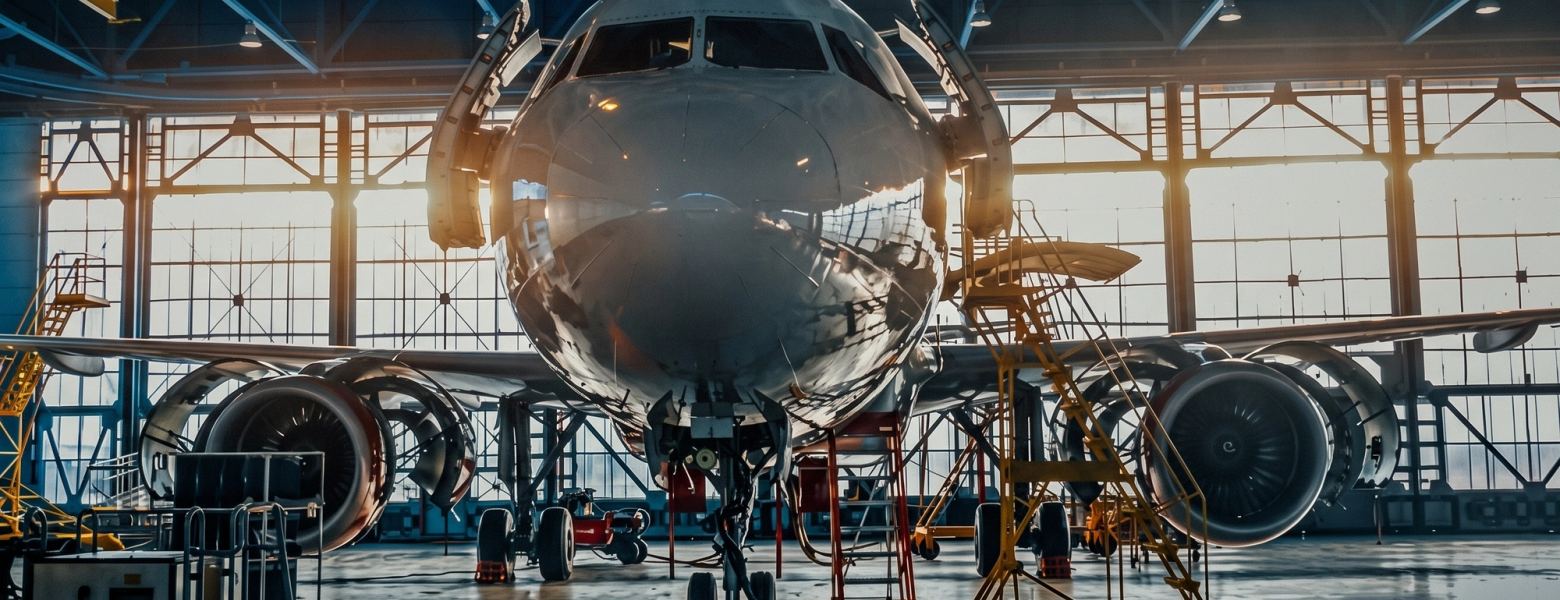
The aerospace industry faces enormous operating and cost pressures. Manufacturers and operators are challenged to scale production while simultaneously innovating new products and meeting unrelenting quality and safety standards. Meanwhile, supply chain managers must deal with diminishing manufacturing sources and material shortages, long lead times, product quality certification, and geopolitical or trade-policy-driven sourcing constraints.
Add to these challenges the persistent shortage of qualified maintenance technicians, retirements, and training necessitated by quickly evolving technology, and the result is a serious gap in knowledge and staff availability on manufacturing, operations, and maintenance teams, threatening delivery schedules, airframe availability, financial performance, and even product quality and safety.
As manufacturers scale production; Maintenance, Repair, and Overhaul (MRO) organizations manage supply and workforce shortages; and airlines/operators manage aging fleets, autonomy is becoming essential. Avathon's Autonomy Platform embeds artificial intelligence (AI)-enabled decision-making directly into operations, accelerating throughput, improving product quality, repairing networks, and ensuring fleet readiness and safety.
Avathon Autonomy tackles the full range of aerospace industry challenges
The aerospace manufacturing and maintenance industry faces a unique set of challenges driven by the need for uncompromised safety, operational efficiency, cost performance, and regulatory compliance.
Maintenance, Repair, and Overhaul (MRO)
Effective MRO processes, which typically represent about 10% to 15% of an airline's total operating costs, are the backbone of any successful airline, air freight operator, or aircraft leaser. Compounding the challenge of effective MRO operations is the fact that organizations are operating with legacy systems that are often 20 years old or more. It isn't just about turning wrenches or replacing line replaceable units (LRUs); it's a high-stakes balancing act between safety, regulatory compliance, and the bottom line. AI provides a wide range of MRO functionality that enables aircraft fleet operators to simultaneously optimize operating tempo, customer satisfaction, worker safety, and profitability.
- Predictive/Prescriptive Maintenance: The most significant impact of AI in MRO operations is the evolution from scheduled or reactive maintenance to condition-based maintenance.
- Sensor Data Analysis: AI algorithms analyze billions of data points from aircraft sensors (engines, avionics, landing gear), then apply normal behavior modeling (NBM) to understand what "good" looks like for individual components. By modeling and then monitoring ongoing component performance, the system can recognize when that component is degrading from normal operation and proactively provide an alert of impending failure, optimizing maintenance scheduling and ensuring worker and passenger safety.
- Early Warning: By predicting when a component will fail, often days to weeks in advance, airlines and air freight operators can replace parts during scheduled downtimes rather than risk an expensive, unscheduled engine change or other maintenance activity at a remote location.
- Corrective Action Prescription: By prescribing mitigating actions and planning in advance for required/available parts, work orders, and technician availability, maintenance is accomplished efficiently, maximizing uptime and optimizing resource usage.
- Dynamic Work Scheduling: AI-enabled MRO processes generate, rank, and optimize work orders, matching tasks with the right technicians, tools, and parts while optimizing routes and timing.
- Drone Integration: Drones equipped with high-resolution cameras can scan an aircraft fuselage, wings, and other surfaces for lightning strikes, dents, loose rivets and other fasteners, or paint degradation.
- Automated Detection: AI-enabled computer vision analyzes these images to flag leaks, corrosion, microscopic cracks, or structural anomalies that the human eye might miss, significantly speeding up preflight "walk-around" processes, enhancing safety, and ensuring maintenance efficiency.
Staffing and knowledge
AI isn't about replacing technicians; it's about enhancing efficiency, accuracy, and safety. There is a significant gap between the industry's requirement for specialized talent and the availability of trained workers. With over 700,000 new maintenance technicians projected to be needed globally by 2043, and the US short by nearly 50,000 as soon as next year, alongside components turning over every 5 to 10 years, aerospace organizations must adopt intelligent, autonomous operations to maintain production efficiency, fleet readiness, and network reliability.
- Aging Workforce and Retirements: A large number of experienced technicians, engineers, and manufacturing specialists are retiring, leading to a critical loss of institutional knowledge that is difficult to replace.
- Skills Gap: The rapid introduction of new, advanced technologies in aircraft manufacturing (e.g., composite materials and sophisticated avionics) demands specialized expertise. This creates a skills mismatch, as the available workforce often lacks the training required.
- Talent Pipeline: Attracting, training, and retaining qualified talent to the technically demanding and highly regulated sector is a significant challenge.
- Natural Language Processing (NLP): AI assistants help technicians navigate complex digital manuals quickly and efficiently.
- Fault Isolation: When a pilot reports a specific issue or malfunction, AI can cross-reference the symptom with historical repair logs and manuals to suggest the most likely fix, reducing No Fault Found (NFF) occurrences where parts are replaced unnecessarily or no work is performed prior to sign-off.
- Resource Scheduling: AI optimizes hangar floor space and technician assignments based on skill levels, certifications, and repair urgency.
- AR Integration: Augmented Reality headsets, powered by AI, can overlay wiring diagrams or 3D repair instructions directly onto the physical engine or part the technician is working on. This technique promotes machine learning and data analytics education, training, and implementation, enabling the next generation of digital native workers.
- Digital Twins: By combining physical models and AI to simulate asset behavior under varying loads and environments, scenario-based maintenance planning becomes a reality.
Spares and supply chain
The global nature of aerospace manufacturing and maintenance makes the supply chain highly susceptible to disruption and inefficiency.
- Weakened Supply Chain: Geopolitical uncertainty, scarcity of raw materials, and logistical bottlenecks can lead to parts shortages and significant aircraft delivery delays for manufacturers, as well as extended maintenance turnaround times for MRO providers.
- Inventory Management: The huge variety and long lifespans of aircraft models require enormous and complex parts inventories, some becoming difficult to source for aging aircraft. This increases costs and demands advanced maintenance planning.
- Counterfeit Parts: The complexity and global reach of the supply chain increases the risk of counterfeit or substandard parts entering the maintenance system, potentially compromising safety and incurring compliance risks.
- Additive Manufacturing: AI can serve as the brains behind identifying which components can be 3D printed on site versus needing to be sourced externally, speeding repairs and optimizing asset availability.
- Demand Forecasting: AI analyzes historical usage and flight schedules to accurately predict which parts will be needed, where, when, and in what quantities.
- Logistics: AI optimizes global movement of components, ensuring that the spare actuator, LRU, or other required component is identified and staged before the aircraft lands.
Quality assurance
Given the high-stakes nature of air travel, robust quality standards and rigorous regulatory adherence are critically important.
- Stringent Quality Standards: Both manufacturing and MRO must comply with strict quality control regulations (e.g., AS9100/10/20) and ensure traceability of all components, from raw materials to installed engines and avionics LRUs.
- Evolving Regulatory Landscape: Regulations set by bodies like the Federal Aviation Administration (FAA) and the European Union Aviation Safety Agency (EASA) are constantly evolving, demanding continuous investment in training, documentation, and process changes to remain compliant across all international jurisdictions.
- Certification Timeframes: The certification of new aircraft, components, and repair processes involves extensive testing, documentation, and regulatory review, leading to long development and service entry cycles.
The solution: Avathon Autonomy for Aerospace Operations
Achieving all of these critical outcomes while ensuring profitable operations requires autonomy, a system that can analyze, decide, and ultimately take action across globally dispersed manufacturing facilities, maintenance depots, and supply chains, all in real time.
Avathon Autonomy for Aerospace Operations is a powerful AI platform that integrates supply chain, manufacturing, and maintenance data, enabling coordinated decision-making and actions across the entire aerospace value chain. The Autonomy platform turns aerospace complexity into operating advantage and flight readiness, connecting manufacturing, maintenance, and supply chain information to better manage resource constraints, quality challenges, and parts availability, whether for production or in-service fleets.
Conclusion: world-class aerospace operating performance is autonomous
For the vast global network of airlines and the industries that support them (manufacturers, lessors and operators, and MRO organizations) keeping these fleets safely and economically airborne demands high levels of skill and dedication in maintaining and operating current and aging aircraft while effectively performing complex repairs in a heavily regulated environment.
By integrating insights from production quality, Bill of Materials (BOM), supplier sourcing, parts availability, and workforce capacity, Avathon's Autonomy Platform, an integrated AI platform that analyzes supply chain, manufacturing, and maintenance data, enables organizations to synchronize manufacturing and logistics decisions with in-service maintenance and repair operations, reducing Aircraft on Ground (AOG) events, improving throughput and quality, and strengthening fleet readiness. By leveraging the full power of AI, leaders in the aerospace industry turn complexity into operational advantage, connecting manufacturing, maintenance, and supply chain data to better manage resource constraints, quality challenges, and parts availability for production or in-service fleets.
With Autonomy for Aerospace Operations, Avathon empowers the aerospace industry to optimize all elements of the aviation lifecycle, from build to maintain to sustain, preserving efficiency and resilience, ensuring fleet readiness in an era of continuing political and regulatory change and economic constraint. Avathon's Autonomy platform unifies operating data and turns disconnected systems into coordinated, responsive, AI-powered actions. By linking asset health, supply chain signals, and workforce capacity and skills with the power of AI, aerospace organizations detect issues earlier, prescribe precise solutions, and maintain readiness at scale. The next era of aerospace operations will belong to those who adapt intelligently, with autonomy.
To learn more about Avathon's Autonomy for Aerospace Platform, visit our site.