
Decoding the Subsurface: The AI Revolution in Upstream Operations
AI is turning the flood of seismic, drilling, and sensor data upstream operators already own into decisions that cut non-productive time and lift recovery. Here is how it works across exploration, drilling, reservoir management, maintenance, and HSSE.
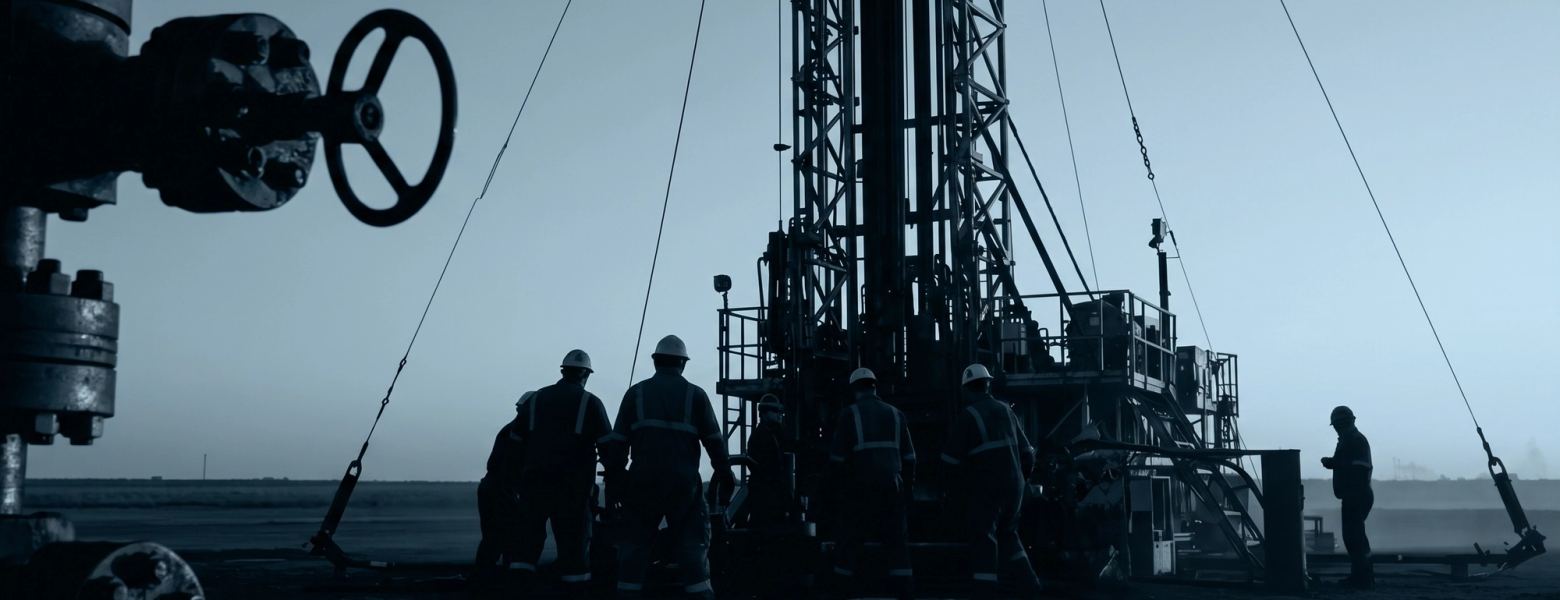
Artificial intelligence has fundamentally transformed the upstream oil and gas sector, encompassing exploration, drilling, reservoir management, and production operations. By converting massive volumes of geological and sensor data into actionable intelligence, AI significantly cuts non-productive time, mitigates environmental footprints, maximizes recovery yields, and ensures worker safety.
The oil and gas industry faces profound challenges due not only to the rapid growth in renewable energy and EVs, but also to the accelerating pace of technology. AI creates immense value in the operating areas unique to each major energy sector, and there is also significant opportunity for value creation spanning the full oil and gas value chain. Avathon's Autonomy Platform for Oil and Gas Operations leverages the operating data that upstream operators already possess and turns that information into insights that maximize asset performance and production output.
Efficient and uninterrupted upstream operations are critical to company performance, directly driving profitability and competitive advantage by controlling the capital and recurring costs needed to discover and extract hydrocarbons. The upstream segment is the single greatest driver of value in the oil and gas industry, and the wide-ranging capabilities of AI improve cost efficiency and maximize product output, translating to greater efficiency and profitability in volatile commodity and retail markets.
Avathon Autonomy tackles the challenges of oil and gas operations
Exploration and subsurface characterization
Traditionally, interpreting seismic surveys and building reservoir models was a time-intensive manual process prone to human fatigue and error. AI has made this activity more data-driven, efficient, and cost-effective.
- AI-powered seismic interpretation: Machine learning models trained on thousands of historical seismic volumes automatically detect faults, horizons, salt bodies, and stratigraphic features. This reduces interpretation timelines from months to weeks and increases structural mapping precision.
- Automated formation evaluation: Deep learning algorithms process petrophysical well logs instantly, assessing porosity, permeability, and fluid saturation with high consistency to pinpoint deposits faster.
- Generative AI guidance for drilling and production: AI enhances real-time analysis of drilling logs, sensor data, and rig performance with contextual recommendations that optimize exploration effectiveness, production efficiency, and operational profitability.
Drilling optimization and hazard prevention
Drilling is one of the most capital-intensive phases of upstream operations, where unexpected delays rapidly drive up expenses. A recent McKinsey report indicates that technology-enabled exploration and drilling could generate savings of as much as $2 per barrel of oil equivalent (BOE), with a further $3 per BOE derived from AI-enabled reservoir and well management.
- Predictive drilling analytics: Real-time monitoring systems track hundreds of drilling parameters, including weight on bit, rotary speed, and mud properties, to anticipate hazards like stuck pipe, lost circulation, or wellbore instability hours before they occur.
- Real-time geosteering: Advanced algorithms process logging-while-drilling (LWD) data to dynamically adapt wellbore trajectories. This keeps lateral sections locked inside thin, high-yield pay zones, significantly boosting reservoir contact.
- Onshore rig logistics optimization: AI minimizes rig move times, optimizing logistics scheduling, routing, crew, and equipment utilization to reduce costs and maximize product output.
Reservoir modeling and production optimization
Once a well is online, maintaining steady output and maximizing total recovery over its lifecycle presents continuous technical challenges.
- Machine learning reservoir modeling: AI integrates seismic data, core samples, and historical production logs to build high-resolution, dynamic reservoir twins. These models update continuously as new data streams in, optimizing well placement and enhanced oil recovery (EOR) strategies.
- Artificial lift and flow management: AI models monitor subsea and surface equipment, such as electric submersible pumps (ESPs), to optimize flow rates, mitigate sand production, and prevent premature well decline.
- Computational knowledge graphs: CKG technology defines the relationships and interdependencies between wells, equipment, and operational workflows to improve risk prediction, decision-making, and process efficiency. Using proprietary CKG technology to integrate feedstocks, chemistry, and equipment maximizes refinery throughput, balances energy loads, ensures product quality, and minimizes emissions.
Predictive maintenance and asset reliability
Unplanned downtime can cripple upstream profitability. Predictive and prescriptive maintenance uses normal behavior modeling (NBM) to analyze real-time and historical performance data from sensors, visual inspection, and acoustic monitoring. It identifies equipment trending toward failure, forecasts failures in ESPs, pumps, and rigs ahead of time, and enables proactive maintenance that reduces non-productive time and extends asset lifetimes. The U.S. Department of Energy has found that predictive maintenance yields an annual average of $34 million in cost savings per operating company.
- Anomaly detection: Equipment sensors coupled with machine learning track vibrations, temperatures, and pressures across surface facilities and subsea equipment. The system flags micro-anomalies, predicts component failures weeks in advance, and makes prescriptive repair recommendations, cutting expensive emergency repairs, deferred production, and non-productive time.
- Pipeline and tank integrity monitoring: AI models use data from existing camera infrastructure to monitor assets, ensuring safer, more reliable production operations. Predictive and prescriptive systems detect leaks, corrosion, and flow anomalies early using multi-modal data from sensors, visual inspection, and acoustic monitoring, enabling automatic shutoffs or other corrective actions that minimize equipment damage, product losses, and safety and environmental risk.
- Parts and skills availability: Predictive models align maintenance schedules with part availability, ensuring critical spares are on hand when and where they are needed at remote drilling sites, and matching them to worker skillsets and tool availability.
Supply chain and logistics integration
AI models ensure that the right parts and the right technical expertise are where they need to be, when they need to be there, to keep complex assets operating at full capacity.
- Optimized inventory levels: AI forecasts demand for refining and distribution equipment, automates procurement, and balances inventory across global networks of warehouses, refineries, and storage facilities, providing contextual views of asset lifecycles, part dependencies, and vendor networks for better decision-making.
- Logistics and routing models: AI optimizes oil and gas supply chains by mapping pipelines, tanks, valves, and fleets for a comprehensive view of operating interdependencies. Models enhance shipping and logistics performance using CKGs and reinforcement learning to optimize fleet effectiveness, improve profitability, and reduce emissions.
Health, safety, security, environmental, and emissions management
Upstream operations occur in hazardous environments under strict regulatory frameworks governing safety, emissions, and carbon intensity.
- Autonomous inspection: Computer vision, automated drones, and fixed sensors monitor sites to identify gas leaks such as methane emissions, corrosion, or safety violations in real time, without putting personnel at direct risk.
- Decarbonization and resource management: AI platforms track and optimize energy consumption, flare efficiency, and water utilization, generating automated compliance and ESG reporting data for stakeholders.
- Computer vision for worker safety: AI-enabled visual systems monitor personal protective equipment (PPE) compliance, safe zone adherence, and incident detection in real time, providing proactive worker warnings and regular reports of current or impending risks. Using video and sensor fusion to detect hazardous conditions such as leaks, spills, flare activity, or gas releases, AI automatically escalates problems to predict and mitigate risks before they become incidents.
Conclusion: AI drives upstream operating excellence
The oil and gas industry has, in recent years, migrated to an operating environment in which equipment is outfitted with a myriad of sensors and communication devices. While all the data collected by this smart equipment offers great opportunities, including better systematic visibility, equipment efficiency, and insight into operations, it also creates plenty of implementation, integration, and analytical challenges.
The daily maintenance and operation of a drilling rig can cost anywhere from $50,000 a day for an onshore rig to $1 million per day or more for offshore platforms, not factoring in labor and foregone revenue from lost production. All told, a top drive failure on an offshore drilling rig that requires a week to repair could end up costing nearly $8.5 million in total costs and lost revenue.
When exploration and production companies suffer major drilling incidents, public faith in the company is often damaged. Corporate brand and image are historically difficult to value, but a company that suffers a failure of this sort may well endure public relations consequences for years afterward.
The Avathon Autonomy Platform uses the power of AI to significantly reduce operating and capital costs while improving exploration and production efficiency for oil and gas operators. Avathon Autonomy is the only energy management platform that optimizes day-to-day operations through agentic management of assets and supply chain processes, ensuring profitable, efficient, and safe energy operations.
To learn more about the Avathon Autonomy Platform for Oil and Gas Operations, visit our website.